NEW DELHI
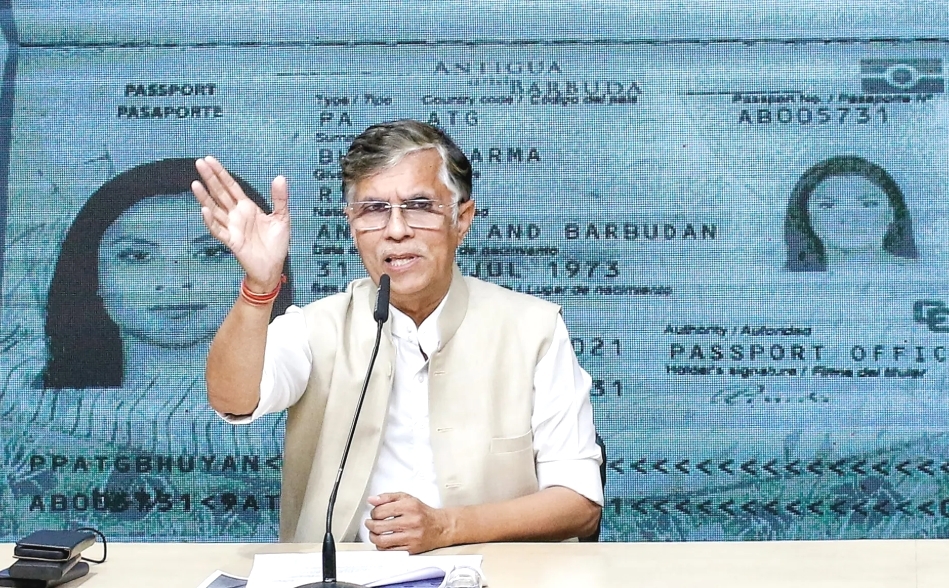
The political firestorm surrounding the Special Intensive Revision (SIR) of electoral rolls intensified sharply following a scathing critique by Congress leader Pawan Khera, who directly challenged the Bharatiya Janata Party (BJP) over the mass exclusion of over 13 crore names from draft voter rolls across various states. Khera’s remarks came as a direct rebuttal to a social media post by the BJP, which defended the massive deletion drive by claiming that 2.8 crore names of deceased voters had successfully been purged from the electoral registries to prevent potential electoral fraud and bogus voting. Seizing upon the BJP's defense, Khera questioned the integrity and precision of the annual Summary Revisions conducted by the Election Commission since 2014. Pointing out that the total number of names struck off under the ongoing SIR exercise has crossed 13 crore, Khera demanded an explanation for the remaining 10.2 crore voters excluded alongside the 2.8 crore deceased individuals. Khera asked whether the BJP was admitting that its administration and the electoral machinery had failed for over a decade to maintain accurate rolls, or if the annual summary clean-ups were profoundly shoddy. The Congress leader reiterated allegations that the sweeping exercise has systematically disenfranchised millions of legitimate citizens, transforming a routine administrative clean-up into an opaque mechanism of voter suppression. The verbal duel between the ruling party and the opposition unfolds against the backdrop of unprecedented internal friction within the Election Commission of India (ECI). Investigative reports revealed that Election Commissioners Sukhbir Singh Sandhu and Vivek Joshi had formally registered objections at least 14 times over a 10-month period concerning procedural transparency, data custody, and unilateral decisions tied to the nationwide rollout of the SIR. While opposition parties, led by the INDIA bloc, have staged statewide protests demanding the resignation and accountability of Chief Election Commissioner Gyanesh Kumar, the ECI has maintained that its final decisions were approved unanimously and that internal notes represent normal administrative feedback. Amid mounting pressure, the Commission recently issued fresh guidelines and announced review mechanisms for its internal IT framework, even as political battle lines over the sanctity of India's voter registries harden.